
Ten days. Thirty five-plus events across the Monterey Peninsula. And one golf course fairway that had never hosted a car show once in 75 years of trying, until this month. Monterey Car Week 2026 ran August 7 through 16, and it closed with the 75th running of the Pebble Beach Concours d’Elegance, the single event every other concours in the world still measures itself against. More than 100,000 people showed up countywide to watch it happen, and visitor spending topped $130 million, which tells you this stopped being a car show a long time ago and became a small economy that exists for one week a year.
I’ve followed this week from hotel rooms up and down I-81 for going on six years now, phone propped against a lamp, refreshing auction results like they’re stock tickets between service center visits. I have never once been able to just walk the show field, and honestly, that distance is part of why the rules around who gets to park a car on that lawn fascinate me more than the cars themselves. Getting invited to Pebble Beach is harder than winning it, and most people who love cars have no idea how the process actually works.
What Actually Happens During Monterey Car Week
Monterey Car Week isn’t one event, it’s a loose federation of them. The week covers The Quail, A Motorsports Gathering, the Rolex Monterey Motorsports Reunion vintage racing at Laguna Seca, Concours on the Avenue, five separate auction houses running sales, and dozens of smaller marque gatherings, all building toward the Pebble Beach Concours d’Elegance on the final Sunday. Every one of those events has its own personality. The Quail is where manufacturers debut the cars they’re not ready to sell yet. Laguna Seca is where the actual racing happens, loud and a little dangerous, the way racing should be. The auctions are where the money gets stupid. And Pebble Beach is the museum piece at the end of it, the event where everything else earns the right to be mentioned in the same sentence.
Photo: Alin Gavriliuc / Unsplash

How a Car Actually Gets Onto the Pebble Beach Lawn
Here’s the part most guys watching from home never think about. You cannot buy your way onto the Pebble Beach show field, there is no entry fee that gets a car a spot, and there is no walking up with a trailer and asking nicely. Owners submit applications every November, the paperwork is due by early January, and the Concours Selection Committee spends February deciding which cars actually get an invitation. Most years, only a few hundred cars make the cut out of a field of contenders that would fill a stadium parking lot.
The Committee also runs a rule that keeps the show from turning stale: a car that’s already shown at Pebble Beach or another major concours generally cannot come back within a ten-year window, unless it’s changed hands and gotten a fresh restoration, or it qualifies as an untouched original preservation car. That single rule is why you don’t see the same fifty Duesenbergs rotating through every August. It forces new cars, new owners, and new stories onto the field every single year, whether the committee wants variety or not.
Once a car is actually there, the judging splits into two very different jobs. Class Judges pore over originality and authenticity down to the fastener, while Honorary Judges score the car on design, styling, and elegance, and both sets of scores matter before a car can even be considered for the big trophy. Cars are judged for historical accuracy, technical merit, and style, sorted into classes by marque, coachbuilder, country of origin, or era. First, second, and third place get handed out in every class, and here’s the part that surprises people: a car has to win its class outright before it’s even eligible for Best of Show. There’s no wildcard path to the big trophy. You earn your way up, one category at a time.
The Tour d’Elegance Rule Nobody Talks About
The most interesting rule at Pebble Beach isn’t a judging rule at all, it’s a driving requirement. More than 150 Concours entrants take part in the Pebble Beach Tour d’Elegance, a multi-hour drive along the Monterey coastline days before judging, and the whole point is to prove these multi-million dollar cars can still be driven, not just trailered onto a lawn and detailed within an inch of their lives. The Tour exists specifically to kill the “trailer queen” reputation that used to follow concours culture around. If two cars tie in class judging, the one that completed the Tour gets the higher award. Drive it or don’t, but driving it breaks the tie.
I like that rule more than almost anything else about this event. A hundred year old car that can’t survive a coastal drive without a flatbed following it isn’t preserved, it’s embalmed, and Pebble Beach is one of the only places in the world that actually penalizes owners for treating their cars that way. Buy once, buy right applies to a Duesenberg the same as it applies to a truck. If it can’t do the job it was built for, what exactly are you paying for.
The 75th Concours Puts Ferrari Front and Center
This year’s show carried extra weight. The 2026 event marked the 75th running of the Pebble Beach Concours d’Elegance, and Ferrari was the featured marque, with dedicated classes for Ferrari’s Le Mans winners, its NART competition cars, and Vignale-bodied Ferraris representing the golden era of Italian coachbuilding. Vignale itself got tapped as the featured coachbuilder alongside Ferrari, which is the kind of pairing that only makes sense to people who’ve spent decades studying who bodied what for whom in 1950s Turin, and that’s exactly the crowd Pebble Beach exists for.
The event also rolled out brand new classes for the anniversary, including Early American Speedsters honoring pre-WWI machines like the Mercer Raceabout and Stutz Bearcat, and Classic Streamliners celebrating the wild aerodynamic experiments of the 1930s. Adding new classes for a 75th anniversary instead of just running the same greatest hits says something about how the event sees itself, less like a museum that’s finished collecting and more like one still actively deciding what deserves a permanent home.
Photo: Jeff Cooper / Unsplash

Forty Three Miuras on a Fairway That’s Never Hosted a Car Before
The single moment from this year’s week that I can’t stop thinking about didn’t happen inside the Concours ropes at all. Lamborghini gathered more than 40 Miuras on Pebble Beach’s third fairway to mark the model’s 60th anniversary, the largest assembly of Miuras ever brought together anywhere in the world, and it happened on ground that had never been opened for a featured car display in the Concours’ 75 year history. Forty plus Miuras is more than double what Lamborghini pulled together for the car’s 40th and 50th anniversary gatherings combined.
Lamborghini opened the display to the public for one day, no ticket required beyond whatever it took to get onto the peninsula in the first place. Every mid-engine Lamborghini built since owes something to the Miura, and every modern exotic supercar owes something to what the Miura started, so watching 40 of them parked wheel to wheel on a golf course is about as close as this hobby gets to seeing a family tree laid out in metal. Stephan Winkelmann, Lamborghini’s CEO, called it a tribute to the visionaries who created the Miura and the owners who kept it alive for almost six decades. He’s not wrong, and for once that’s not just a press release talking.
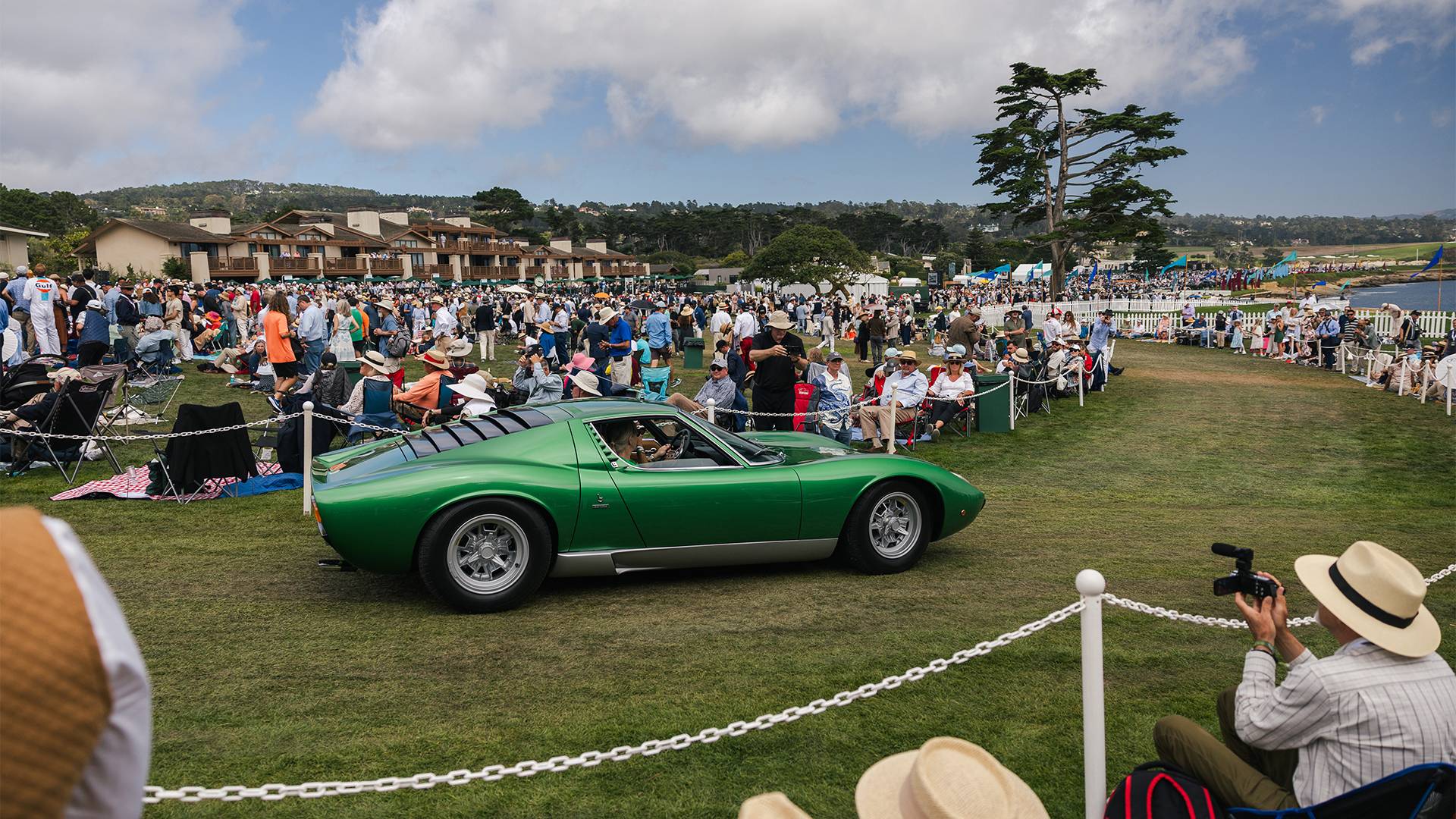
Photo: Lamborghini
The Quail’s Hypercar Circus
If Pebble Beach Sunday is the museum, The Quail on Friday is the toy store. The Quail, A Motorsports Gathering hosted more world premieres in one afternoon than most international auto shows manage in a full week, headlined by Bugatti’s one-off Destrier, a 1,578 horsepower hypercar built around the Bolide’s quad-turbo W16 and standing just 39.4 inches tall, the lowest Bugatti has ever built. Bugatti calls it Programme Solitaire, a coachbuilding program that sits above even the brand’s already absurd Sur Mesure customization tier, and the Destrier was built for exactly one customer.
Hennessey used the same stage to debut its Blackbird, a naturally aspirated, manual-transmission hypercar limited to 71 units at $2.5 million before taxes, a genuinely strange and admirable decision at a moment when almost everything else on that lawn was turbocharged, hybridized, or both. Lamborghini brought the Revuelto SV, its hardcore V12 hybrid flagship, and reveals or announcements rolled in from Pagani, Koenigsegg, Gordon Murray Automotive, Aston Martin, Bentley, Lotus, and even Acura. Say what you want about the state of the car industry, nobody looked at that lawn on Friday and thought the enthusiasm was dying.
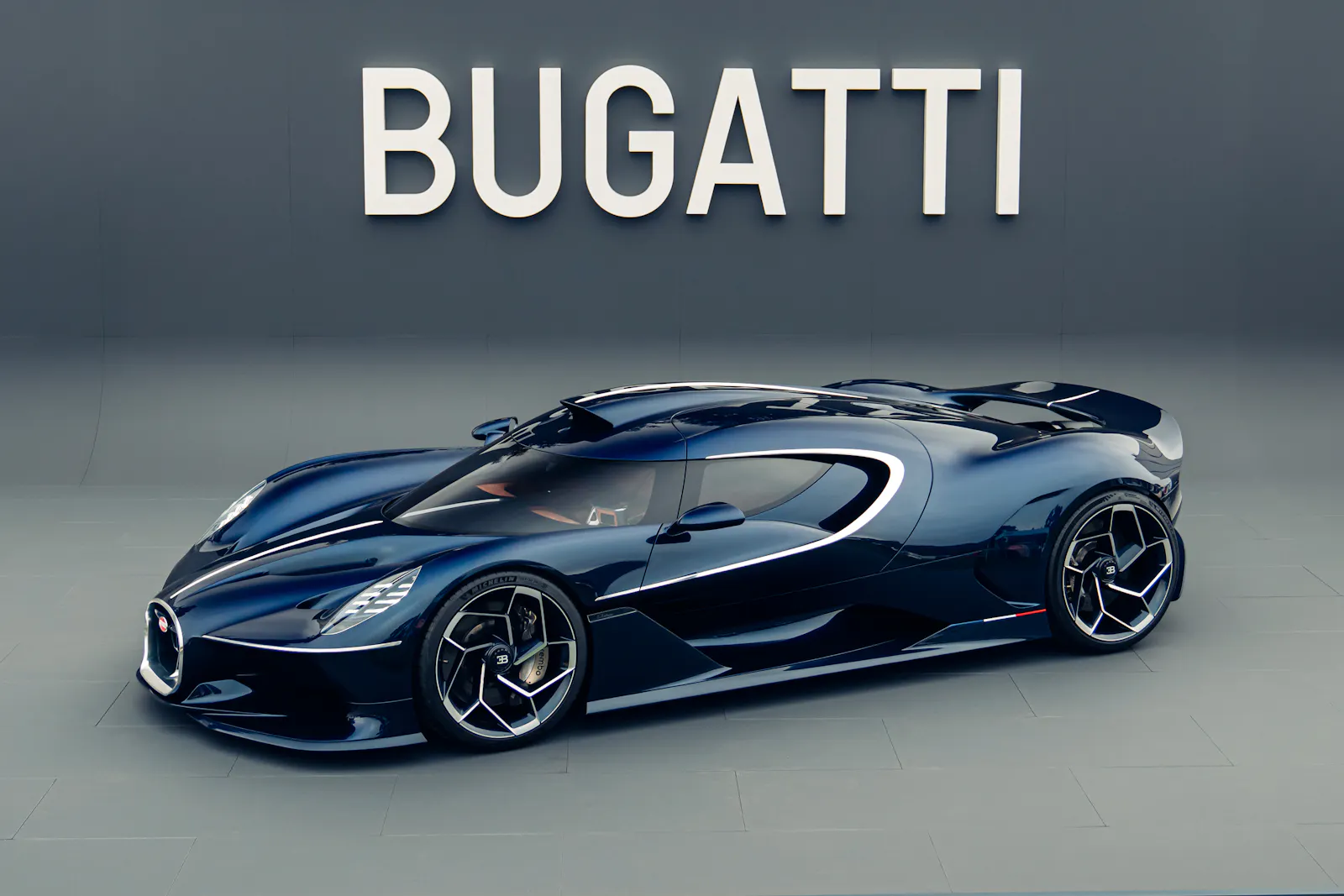
Photo: Bugatti
$748 Million Later
Then there’s the money, because Monterey Car Week always ends with a number that makes you put your coffee down. The five major auction houses selling during Car Week combined for roughly $748 million in total sales this year, up from $432.7 million in 2025 and well past the previous 2022 record of $471.2 million. RM Sotheby’s alone brought in $380 million at a 90 percent sell-through rate. Mecum nearly tripled its 2025 number, closing at $114.2 million. Gooding Christie’s cleared 94 percent of its catalog, the best sell-through of any house at the sale.
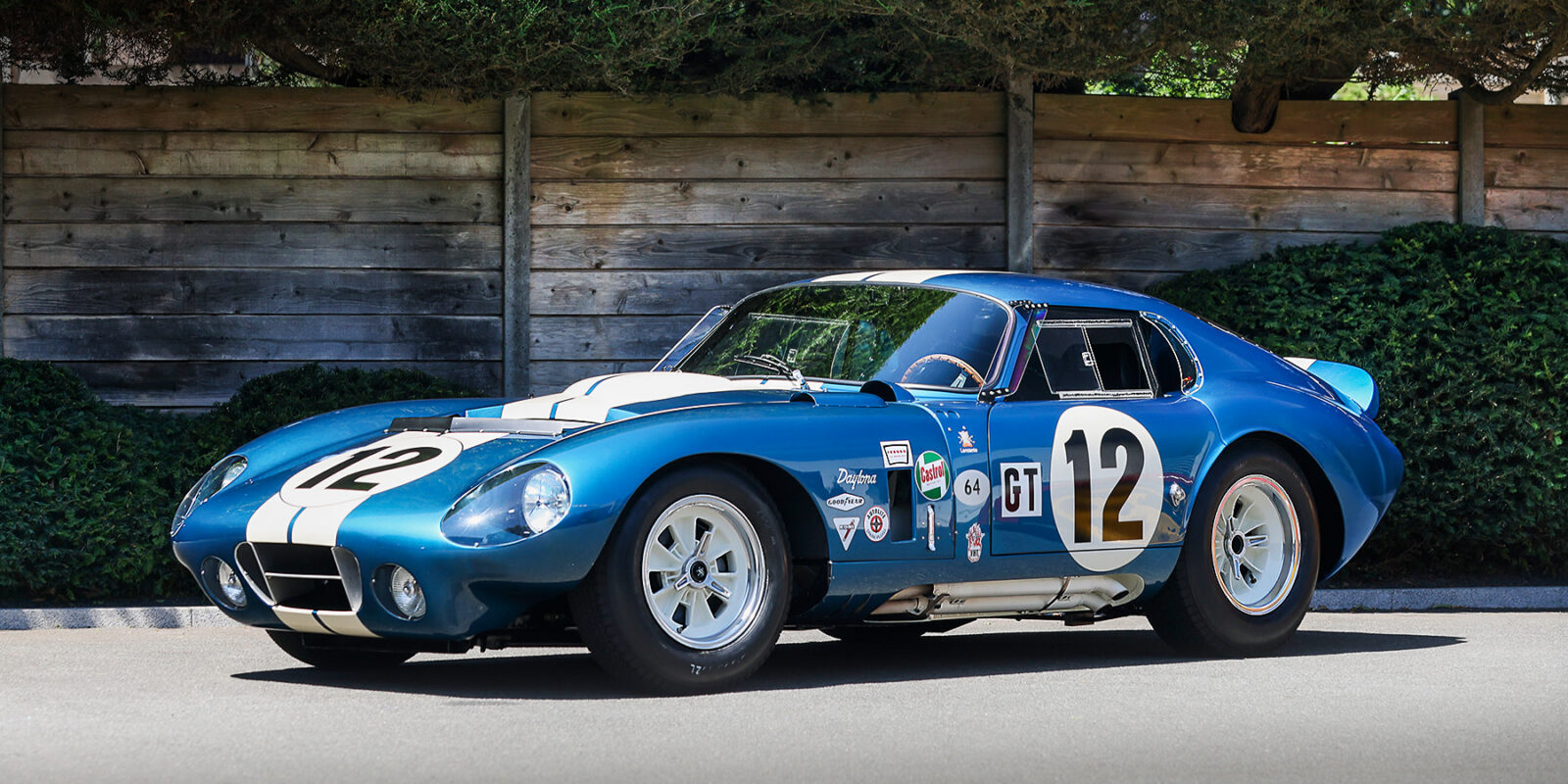
The single highest price of the week went to a 1964 Shelby Cobra Daytona Coupe, chassis CSX2300, the only Daytona Coupe Carroll Shelby ever personally owned, which sold for $42,905,000 at Gooding Christie’s and became the most expensive American car ever sold at public auction. This is a car that raced in Japan through 1968 after Shelby American was done with it, came home to its creator in 1975, and still gets driven at Goodwood and the Tour Auto today instead of sitting under a cover. RM Sotheby’s answered with the “Pop Art F1,” a 1996 McLaren F1 GTR once owned by Pink Floyd’s Nick Mason, which brought $34,655,000 and became the most expensive McLaren ever sold. I already wrote about the Ferrari Luce Chassis 0 selling for $40 million earlier this month, and that sale alone would have been the headline of a normal Car Week. This year it was the third biggest story of its own auction week.
Photo: Gooding Christie’s
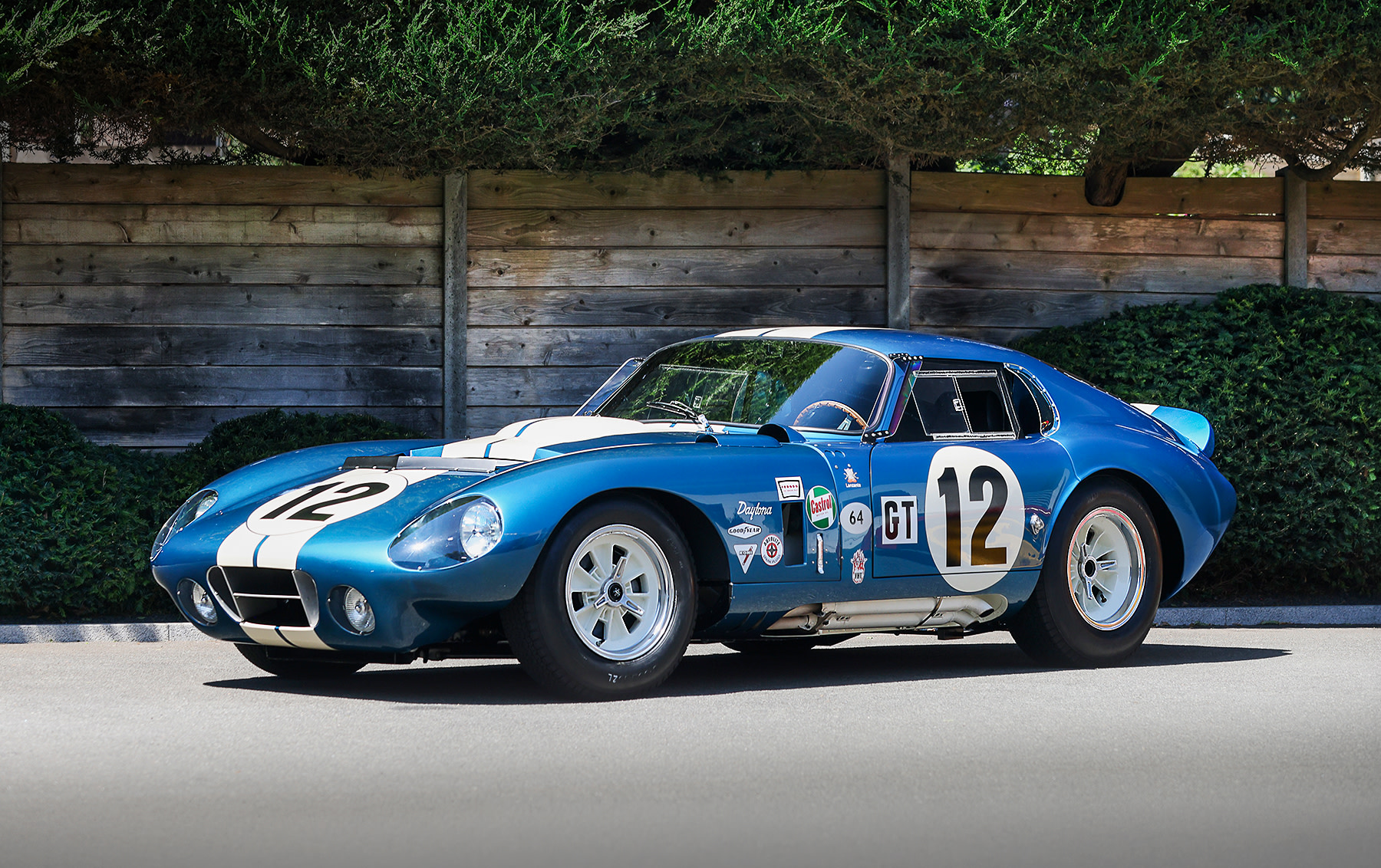
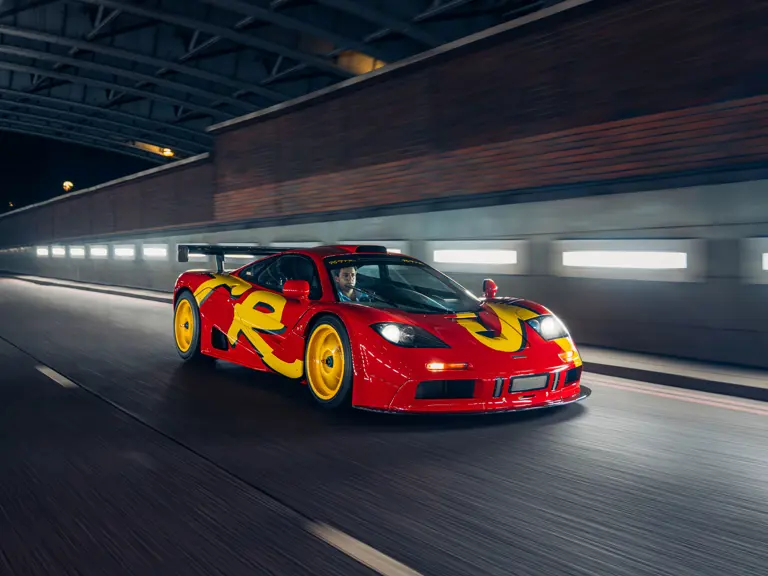
Photo: RM Sotheby’s
My take, and I’ll die on this hill: the rules are the best part of Pebble Beach, not the price tags. Anybody with enough money can eventually buy a rare car. Getting a ten-year cooldown, two separate panels of judges, and a mandatory road drive to even be considered for a trophy is what keeps the whole event from turning into a very expensive parking lot. The auctions get the headlines because the numbers are absurd and easy to print. The Selection Committee and the Tour d’Elegance are the reason there’s still something worth auctioning in the first place.
If you could only watch one piece of Car Week next year on your phone between meetings, which would it be, the Concours judging, the Miura fairway, or the auction results scrolling by? Drop it in the comments.